
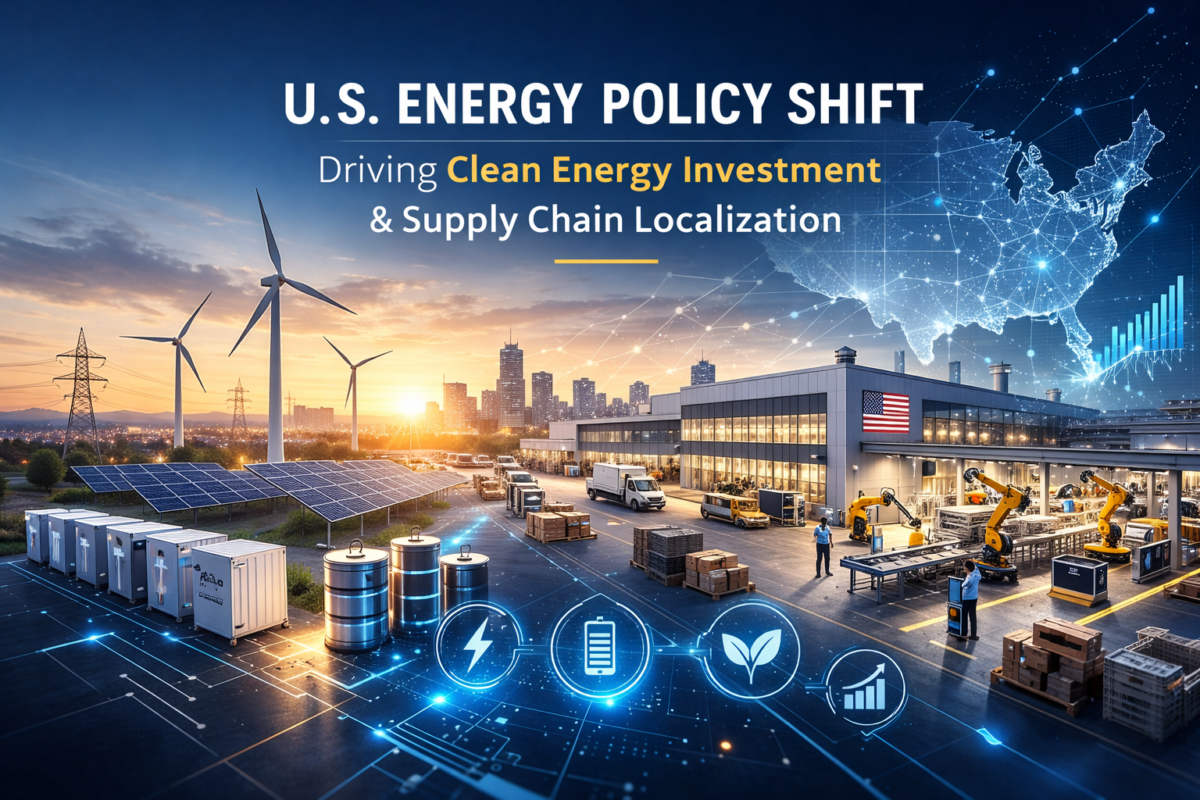
U.S. Senate Democrats are currently negotiating a new energy bill that could reshape the country's industrial landscape. While the details of the legislation are still being discussed, the direction is becoming increasingly clear: expand clean energy investment, modernize grid infrastructure, and strengthen domestic energy supply chains.
For global manufacturers, this development represents more than just energy policy — it signals potential shifts in industrial strategy within the United States.
Three Key Directions of U.S. Energy Policy
Based on current discussions, the proposed legislation may focus on several strategic priorities.
1. Expanding Clean Energy Investment
The U.S. government continues to support the development of renewable energy industries, including:
-
Wind energy equipment
-
Solar technology
-
Battery and energy storage systems
-
Electric vehicle supply chains
Tax credits, incentives, and industrial policy measures are expected to encourage companies to establish production facilities within the United States.
2. Upgrading Grid and Energy Infrastructure
The U.S. power grid is undergoing modernization, with potential investments directed toward:
-
Grid infrastructure upgrades
-
Transmission systems
-
Large-scale energy storage projects
These initiatives may create new opportunities for manufacturers and suppliers involved in energy technologies.
3. Strengthening Strategic Supply Chains
In recent years, supply chain security has become a key priority in U.S. policy discussions.
Energy equipment, batteries, and critical industrial components are increasingly viewed as strategic sectors, prompting policymakers to encourage domestic manufacturing capacity.
What This Means for Global Manufacturers
The evolving policy landscape suggests that the way companies enter the U.S. market may be changing.
Traditionally, many businesses relied on a simple model:
Overseas manufacturing + exporting to the United States.
However, under new industrial policies, more companies are evaluating alternatives such as:
-
Local assembly operations
-
Regional supply chains
-
Manufacturing closer to end markets
These adjustments are gradually reshaping global manufacturing strategies.
NexPath Insight
For companies planning long-term participation in the U.S. market, understanding policy developments is just as important as product competitiveness.
As the United States continues to invest in industrial capabilities and supply chain resilience, operating closer to the U.S. market may become an increasingly important strategic advantage.
NexPath USA closely monitors policy developments and supply chain trends to support international companies exploring entry and expansion strategies in the U.S. market.
