
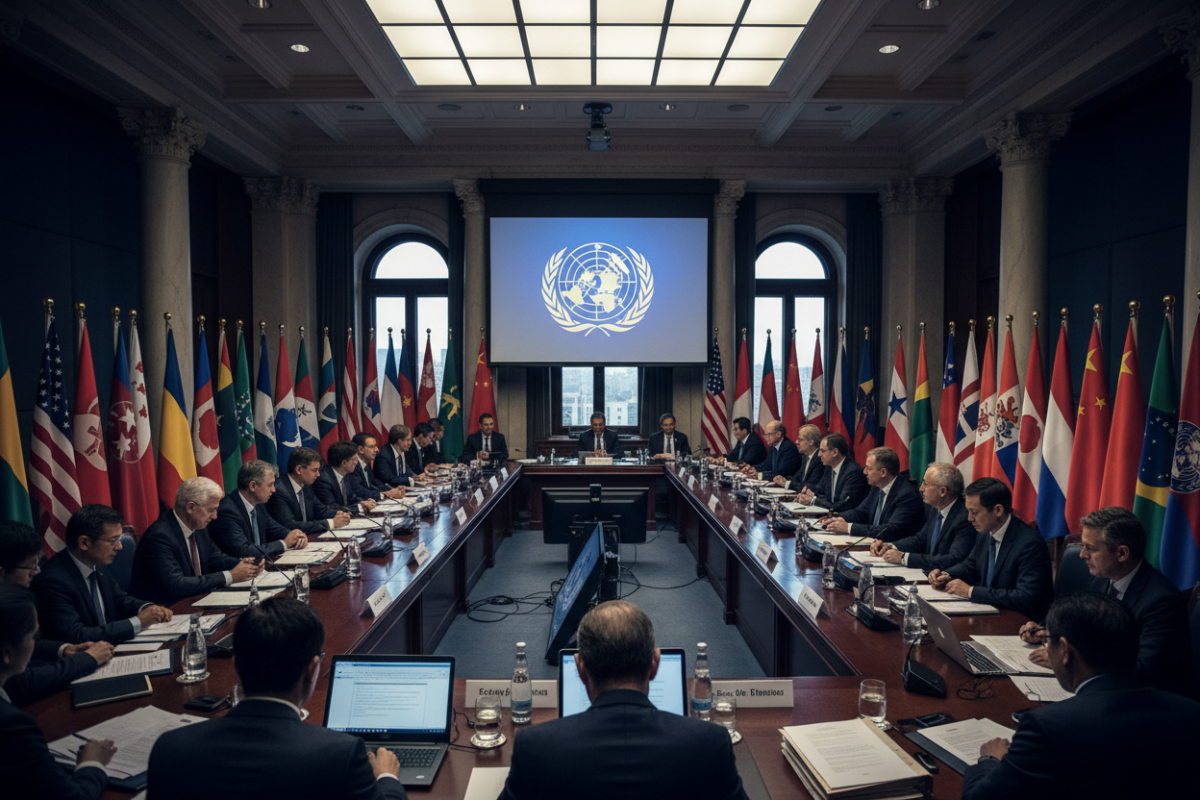
On March 24, 2026, the Trump administration made a landmark move at the World Trade Organization's triennial Ministerial Conference in Yaoundé, Cameroon: the U.S. Trade Representative (USTR) formally called on WTO members to reconsider the organization's foundational "Most Favoured Nation" (MFN) tariff principle — a rule that has governed global trade for decades.
This isn't a minor policy tweak. For Chinese B2B manufacturers and exporters eyeing the U.S. market, it signals a structural shift in the rules of the game.
What Is MFN — and Why Does It Matter to You?
The WTO's Most Favoured Nation principle requires all 164 member countries to treat each other equally on tariffs, import quotas, and trade barriers. In short: if the U.S. gives Country A a low tariff rate, it must offer the same to everyone else.
The Trump administration now argues this system is outdated. In the USTR's position paper, the U.S. contends that MFN rules prevent countries from differentiating between trading partners — particularly those that, in their words, "run persistent and large surpluses" or "build and maintain overcapacity." Without naming China directly, the target is clear.
USTR head Jamieson Greer attended the March 26–29 ministerial meeting in Cameroon personally, signaling the seriousness of the U.S. push.
What the U.S. Actually Wants
The USTR paper calls for a trading system that allows:
- Plurilateral trade agreements — deals between select groups of countries that exclude others
- Differentiated tariffs — the ability to charge different rates to different countries based on perceived "fairness"
- Faster tariff adjustment mechanisms — to respond to perceived economic threats in real time
This is, effectively, a blueprint for a two-tier global trading system: one for U.S.-aligned economies, and one for everyone else.
The Three Risks for Chinese B2B Exporters
- Legitimized tariff discrimination
If MFN reform gains traction, the U.S. would have a WTO-sanctioned framework to maintain — or even increase — elevated tariffs specifically targeting Chinese goods, without violating international trade rules. - Third-country routes becoming riskier
The U.S. has simultaneously launched new Section 301 trade probes into 16 economies, including those often used as transshipment hubs. Routing products through Mexico, Vietnam, or other third countries is facing increasing scrutiny and legal risk. - The window to enter the U.S. market is narrowing
With a fragile U.S.-China trade truce still in place (and Trump's Beijing summit delayed), the current period of relative stability may be one of the last favorable entry windows before the next wave of trade measures takes effect.
What Smart Exporters Are Doing Right Now
The companies winning U.S. contracts in this environment aren't waiting for the policy dust to settle. They are:
- Establishing a legitimate U.S. business presence (LLC registration, U.S. address, local banking) to reduce supply chain scrutiny
- Shifting from price competition to solution selling — U.S. buyers are increasingly selecting on reliability and compliance, not just cost
- Building direct relationships with U.S. buyers through trade shows and on-the-ground representation before new barriers close the door
How NexPathUSA Can Help
At NexPathUSA, we've been tracking WTO reform developments and U.S. trade policy shifts in real time so our clients don't have to. Whether you need to establish a compliant U.S. entity, identify buyers in sectors less exposed to tariff risk, or represent your brand at a U.S. trade show — our team is your on-the-ground partner.
The rules are changing. The question is: are you positioned to play by the new ones?
📩 Book a free 30-minute strategy consultation at nexpathusa.com
Source: Reuters / The Business Times, March 24, 2026 — "US urges WTO members to rethink core tariff rule in face of China threat"
